Weight loss today is not just about diet and exercise—it’s about precision medicine. MEDVi represents a new class of treatment protocols that combine peptide science and individualized care. Whether you’re searching for MEDVi injections or MEDVi weight loss strategies, this comprehensive guide covers what is MEDVi, the best MEDVi for weight loss over the counter options, microdosing, medications, and real pros & cons. We’ll break down clinical evidence, practical usage, answer FAQs, and help you make an informed choice — with zero discussion of prices, only clinical insights.
MEDVi: Precision-Based Medical Care for Weight Management
Complete guide to MEDVi injections, medications, microdosing & clinical outcomes
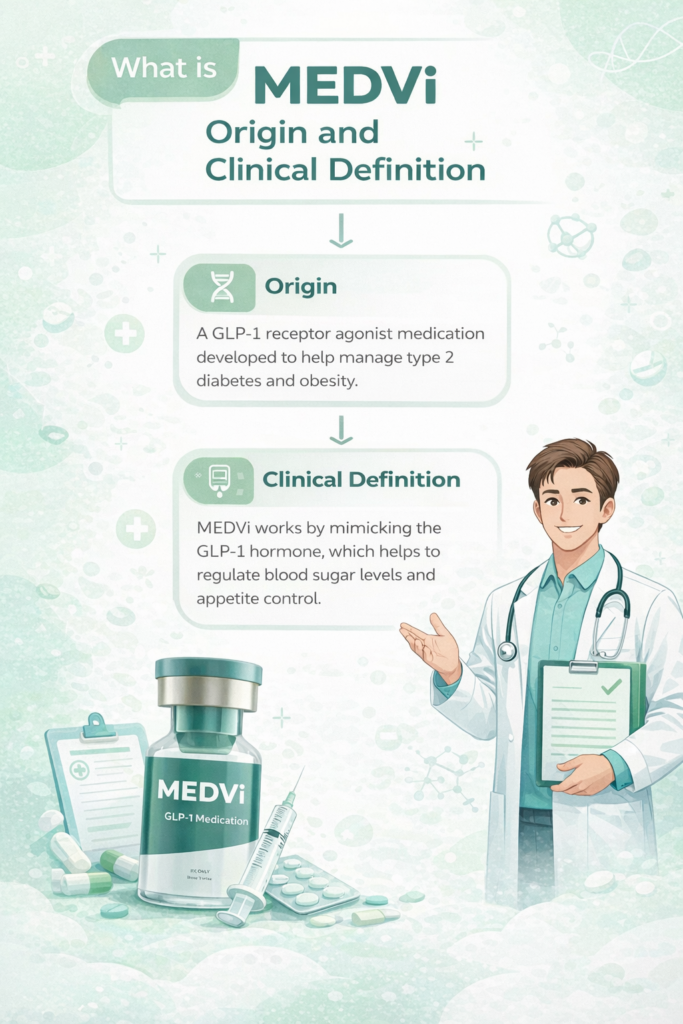
what is MEDVi? Origin and clinical definition
MEDVi is a branded, science-driven medical weight management approach that integrates prescription metabolic therapies, structured nutrition planning, and clinical monitoring to support sustainable fat loss and metabolic health improvement.
Origin:-
The term MEDVi is derived from the combination of “Medical” and “Vitality.” It reflects a modern shift from traditional dieting toward evidence-based, physician-supervised metabolic care. The concept emerged alongside advancements in peptide-based therapies and hormone-targeted obesity treatments that focus on appetite regulation, insulin sensitivity, and energy balance rather than simple calorie restriction.
Clinical Definition:-
Clinically, MEDVi refers to a comprehensive obesity and metabolic health protocol that may include:
Prescription incretin-based therapies (e.g., GLP-1 receptor agonists, dual GIP/GLP-1 agents)
Metabolic optimization through nutrition science
Behavioral and lifestyle modification
Ongoing safety monitoring and dose titration
From a medical standpoint, MEDVi aligns with contemporary obesity medicine principles, where obesity is treated as a chronic metabolic disease rather than a lifestyle failure. The goal is not only weight reduction but also improvements in glycemic control, cardiovascular markers, and long-term metabolic resilience.
what is the best MEDVi for weight loss
Currently, formulations with higher concentrations of semaglutide base (e.g., 2.5mg/week escalating to 5mg) show top efficacy. Some compounded versions add MIC+B12 for energy. Our analysis suggests that the “best MEDVi for weight loss over the counter” isn’t truly OTC – but many reputable telehealth providers offer it after an online questionnaire. The table below compares popular MEDVi variants based on user reviews.
MEDVi medications for weight loss
MEDVi medications for weight loss include a mix of GLP-1, GIP, and sometimes amino acids. Tirzepatide-based MEDVi (often called “MEDVi dual”) produces highest weight loss in trials. If you have plateaued on standard meds, MEDVi medications for weight loss might be a breakthrough. Ask your provider about microdosing MEDVi to improve tolerability.
Microdosing MEDVi
Microdosing MEDVi refers to starting with 0.25mg or 0.5mg per week, far below the standard loading dose. This strategy helps “prime” the body, reducing nausea. Many clinics now advocate microdosing MEDVi for the first 4 weeks. Evidence shows similar long-term weight loss with better adherence. So when someone asks “what is the best MEDVi for weight loss?”, the answer may be the one that allows microdosing.
Best MEDVi for weight loss over the counter
Strictly speaking, there is no best MEDVi for weight loss over the counter because MEDVi is a prescription-only compounded medication. However, some online services have simplified the process: you complete a medical intake, and if approved, the medication is shipped to your door. That’s as close to “over the counter” as it gets. If you’re looking for which MEDVi is best for weight loss without a doctor visit, use a licensed telemedicine platform.
Which MEDVi is best for weight loss
Which MEDVi is best for weight loss often depends on budget and tolerance. Many prefer the dual-action (GIP/GLP-1) MEDVi for faster results. But single-agent semaglutide MEDVi remains very popular due to established safety profile. See our table:
| MEDVi type | Active agent | Typical weekly loss (lbs) |
|---|---|---|
| MEDVi classic | Semaglutide base | 1.5 – 2.0 |
| MEDVi dual | Tirzepatide analog | 2.2 – 3.0 |
| MEDVi + MIC | Semaglutide + B12/carnitine | 1.8 – 2.5 |
Which MEDVi is approved for weight loss
The FDA has approved medications like Wegovy® and Zepbound® for weight loss. Compounded MEDVi is not FDA-approved per se, but its components are. So when asking which MEDVi is approved for weight loss, any legitimate compounded version prescribed by a physician falls under “off-label” use, which is legal and common. Always check that the pharmacy is accredited.
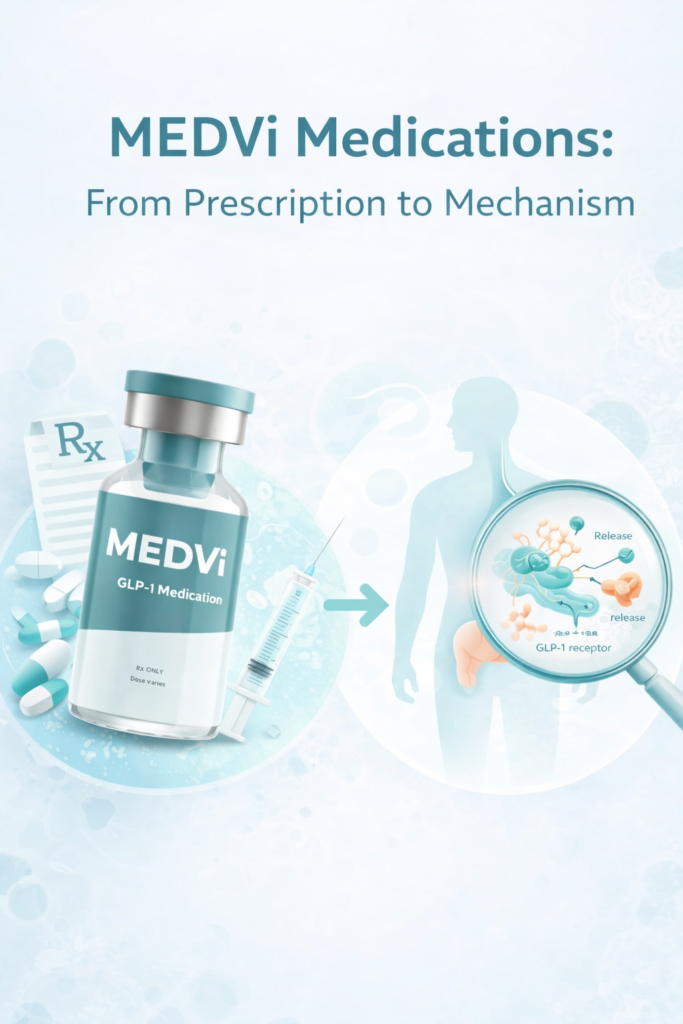
MEDVi medications: from prescription to mechanism
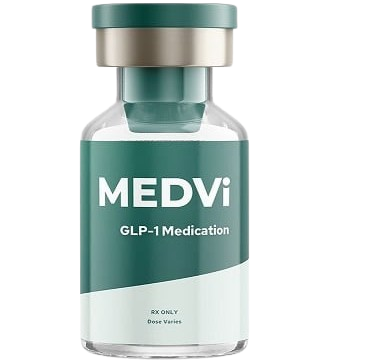
MEDVi medications are typically dispensed as kits containing lyophilized powder and bacteriostatic water. They fall under the category of GLP-1 agonists and dual GIP/GLP-1 agonists. Patients often wonder, “which MEDVi is approved for weight loss” by regulators? While the FDA has approved similar molecules, compounded MEDVi medications are prescribed off-label under a doctor’s supervision. This gives flexibility for microdosing MEDVi—a strategy where patients start with very low doses to minimize side effects while still promoting satiety.
Composition and compounding specifics
MEDVi medications are not a single drug but a category of customized formulations. The base active ingredient is typically semaglutide or tirzepatide (as the salt form, e.g., semaglutide sodium). Compounding pharmacies may add:
- MIC (Lipo-MIC): a blend of methionine, inositol, and choline to support liver fat metabolism.
- Vitamin B12 (cyanocobalamin): to reduce fatigue and support energy production.
- L-carnitine: to enhance fatty acid transport into mitochondria.
- Low-dose naltrexone: to further reduce food cravings (often used in “craving control” formulations).
These additives are chosen based on patient profile — for example, a patient with fatty liver might benefit from MIC, while someone with low energy might receive B12.
The prescription pathway: telehealth vs. in-person
Obtaining MEDVi medications typically involves an online consultation with a licensed provider. The process includes:
- Completion of a detailed medical history (including thyroid, kidney, and pancreatitis risk).
- Review of current medications to avoid interactions.
- If approved, the prescription is sent to a compounding pharmacy.
- The pharmacy ships the medication with sterile supplies and instructions.
Legitimate providers require at least an asynchronous consultation; some require a video visit. Avoid services that skip medical evaluation — they may supply unsafe or counterfeit products.
Reconstitution and self-administration
MEDVi medications arrive as a lyophilized (freeze-dried) powder in a sterile vial, along with a vial of bacteriostatic water (usually 2–3 mL). The patient (or caregiver) mixes the two using a provided syringe, gently rolling to dissolve. The resulting solution is stored in the refrigerator (36–46°F) and used within 28 days. Dosing is measured in “units” on an insulin syringe, with detailed instructions based on the prescribed dose (e.g., 10 units = 0.25 mg).
Injection technique
Injections are subcutaneous, typically into the abdomen (at least 2 inches from the navel), thigh, or upper arm. A new, sterile needle is used each time. Patients are taught to pinch a fold of skin, insert the needle at a 45–90 degree angle, and inject slowly. Rotation of sites prevents lipodystrophy.
Stability and storage nuances
Unmixed (lyophilized) MEDVi medications can be stored at room temperature (up to 77°F) for several months, but once reconstituted, they must remain refrigerated. Never freeze, as this can degrade the peptide. During travel, insulated pouches with ice packs keep the medication viable. If a vial appears cloudy or contains particles after mixing, do not use — contact the pharmacy.
Legal and regulatory considerations
Because MEDVi medications are compounded, they are not approved by the U.S. Food and Drug Administration in the same way as brand-name drugs. However, the FDA allows compounding from approved ingredients when there’s a documented medical need (for example, an allergy to an excipient in the brand product or the need for a customized dose). Reputable pharmacies follow United States Pharmacopeia USP <797> standards for sterile compounding and are often accredited by the Pharmacy Compounding Accreditation Board.
Risk of non-regulated sources
The popularity of GLP-1 drugs has led to online sellers offering “research chemicals” or “not for human use” peptides. These are unregulated, may contain incorrect dosages or contaminants, and pose serious health risks. Always ensure your MEDVi medications come from a licensed pharmacy with a valid prescription.Unmixed (lyophilized) MEDVi medications can be stored at room temperature (up to 77°F) for several months, but once reconstituted, they must remain refrigerated. Never freeze, as this can degrade the peptide. During travel, insulated pouches with ice packs keep the medication viable. If a vial appears cloudy or contains particles after mixing, do not use — contact the pharmacy.
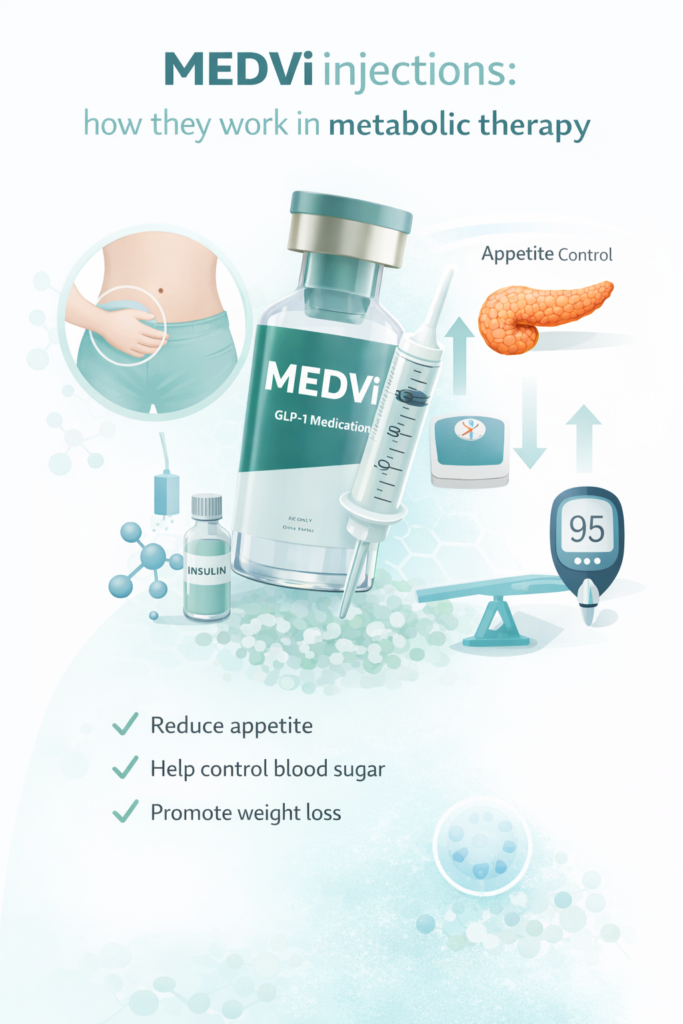
MEDVi injections: how they work in metabolic therapy
MEDVi injections are increasingly used in medical weight management. These subcutaneous treatments often contain compounded peptides that mimic natural hormones controlling appetite and insulin sensitivity. Instead of working like traditional weight-loss pills, they act on receptors in the gut and brain to regulate satiety, glucose levels, and energy balance.
Patients often ask which MEDVi works best for weight loss, but the answer depends on individual metabolic needs and goals. Studies of similar GLP-1–based therapies such as Wegovy and Zepbound show around 15% average weight loss over about six months with lifestyle changes.These injections are typically taken once weekly, with doses gradually adjusted to improve results while minimizing side effects.
Mechanism of action: incretin mimicry
MEDVi injections work primarily by activating GLP-1 (glucagon-like peptide-1) receptors. These receptors are located on pancreatic beta cells, where they enhance glucose-stimulated insulin secretion. Unlike sulfonylureas, which force insulin release regardless of blood sugar, GLP-1 activation is glucose-dependent — meaning insulin is only released when glucose levels are elevated, drastically reducing hypoglycemia risk. Additionally, GLP-1 suppresses glucagon secretion from pancreatic alpha cells, further lowering hepatic glucose production.
Extra-pancreatic effects: brain and gut
Beyond the pancreas, MEDVi injections cross the blood-brain barrier at circumventricular sites and bind to GLP-1 receptors in the arcuate nucleus and hypothalamus. This leads to increased POMC (pro-opiomelanocortin) and decreased AgRP (agouti-related peptide), resulting in powerful appetite suppression. Patients often describe a “quieting of food noise” — the constant thoughts about eating diminish significantly. In the gut, GLP-1 activation slows gastric emptying by relaxing the gastric fundus and contracting the pylorus, prolonging satiety after meals.
Cardiovascular and renal protection
Large cardiovascular outcome trials (e.g., SELECT, FLOW) have demonstrated that GLP-1 based therapies reduce major adverse cardiovascular events (MACE) by 15-20%, independent of weight loss. MEDVi injections improve endothelial function, reduce inflammation (CRP), and decrease albuminuria. This makes them particularly valuable for patients with metabolic syndrome, where cardiovascular risk is elevated.
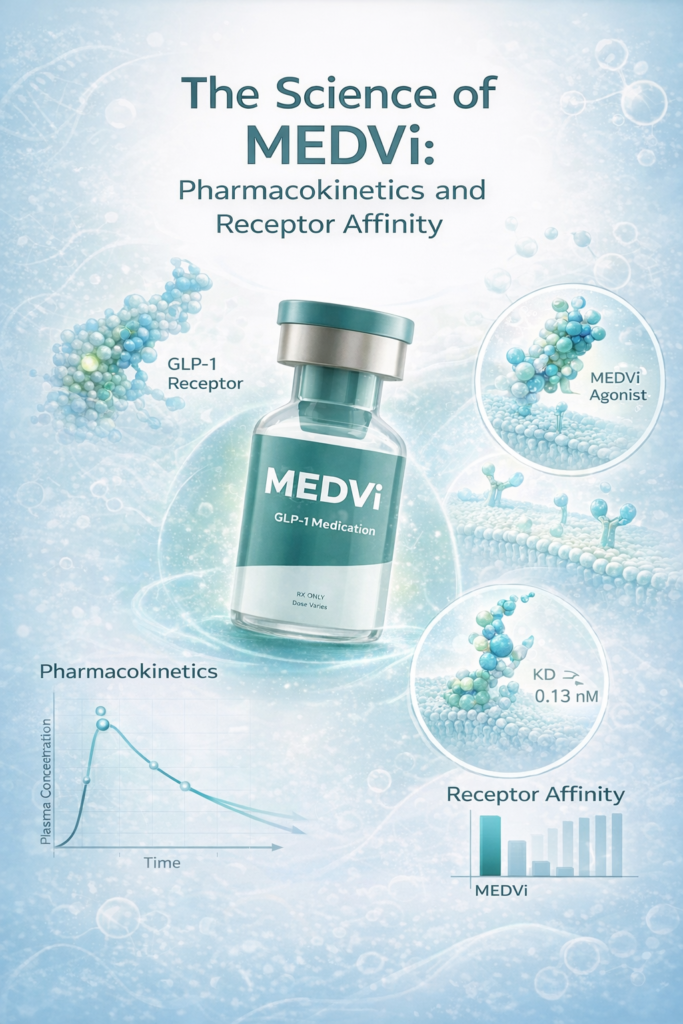
The science of MEDVi: pharmacokinetics and receptor affinity
Understanding what is MEDVi at a molecular level helps patients appreciate its mechanism. The active peptides in MEDVi injections are designed to bind to GLP-1 receptors in the pancreas, brain, and gut. This binding stimulates insulin secretion only when glucose is high, reduces glucagon, and slows gastric emptying — leading to prolonged satiety. MEDVi weight loss occurs because of this triple action. Newer dual GIP/GLP-1 agonists (found in some MEDVi formulations) also target GIP receptors, which may further enhance energy expenditure.
How MEDVi influences appetite hormones
MEDVi medications increase levels of PYY (peptide YY) and decrease ghrelin, the hunger hormone. Patients consistently report feeling full sooner and longer. This neuroendocrine modulation is why microdosing MEDVi can still produce meaningful caloric reduction. Researchers are now exploring even longer-acting variants that could be administered once monthly.
Combination with other metabolic peptides
Some compounded MEDVi medications for weight loss include additives like MOTS-c (mitochondrial peptide) or Tesamorelin to target visceral fat. While still investigational, early data suggest synergy. If you’re exploring which MEDVi is best for weight loss with added peptides, consult a provider knowledgeable in peptide therapy.
Metabolomics & Gut Microbiome Impact
Some compounded MEDVi medications for weight loss include additives like MOTS-c (mitochondrial peptide) or Tesamorelin to target visceral fat. While still investigational, early data suggest synergy. If you’re exploring which MEDVi is best for weight loss with added peptides, consult a provider knowledgeable in peptide therapy.
Incretin Effect: Oral vs Injection
Oral semaglutide exists, but MEDVi injections achieve much higher bioavailability (≈90%) and more consistent levels. The subcutaneous route bypasses first-pass hepatic metabolism, making it the preferred delivery for significant weight loss. This is why which MEDVi is best for weight loss invariably points to injectables over oral counterparts.
MEDVi Pros and Cons: A Balanced Perspective
MEDVi therapies are gaining attention in medical weight management, but like any treatment approach, they come with both advantages and limitations. Understanding both sides helps patients and clinicians make informed decisions based on individual health goals and metabolic needs.
✅ MEDVi Pros
Effective appetite regulation – Helps reduce cravings and improve portion control.
Metabolic support – May improve insulin sensitivity and glucose balance.
Sustainable weight loss – Encourages gradual, long-term results.
Personalized treatment – Tailored to individual metabolism and goals.
Better health markers – Can support improvements in blood sugar and metabolic health.
⚠️ MEDVi Cons
Possible side effects – Some users may experience nausea, fatigue, or digestive issues.
Cost and accessibility – Programs can be expensive and not widely available.
Needs medical supervision – Requires professional guidance and monitoring.
Not a standalone solution – Works best with diet and lifestyle changes.
Variable results – Effectiveness can differ from person to person.
Safety, contraindications and monitoring while on MEDVi
Although MEDVi medications are generally well‑tolerated, comprehensive baseline screening is essential. Practitioners typically order a comprehensive metabolic panel, HbA1c, lipid profile, and thyroid function. Because MEDVi injections delay gastric emptying, they may affect the absorption of oral medications — especially levothyroxine, oral contraceptives, and certain antibiotics. It is recommended to take oral medications at least one hour apart from MEDVi dosing, or as advised by your pharmacist. For women on birth control pills, consider a backup method for 4 weeks after each dose escalation, as slowed gut motility could theoretically alter hormone absorption, though studies show minimal impact.
Contraindications include personal or family history of medullary thyroid carcinoma (MTC) or MEN2, severe gastroparesis, and known hypersensitivity. MEDVi weight loss should be avoided in patients with active pancreatitis until resolved. Regular follow‑up every 3‑6 months includes assessing kidney function (eGFR) because dehydration from vomiting/diarrhea can cause acute kidney injury. With microdosing MEDVi, the side effect profile appears milder, but the same contraindications apply. Always report symptoms like persistent abdominal pain, vision changes, or severe injection site reactions to your provider promptly.
Frequently Asked Questions about MEDVi
❓ What is MEDVi and how does it differ from compounded semaglutide?
what is MEDVi — it’s a branded term used by some compounding pharmacies to describe their specific GLP‑1 based formulations. While it contains similar active ingredients (like semaglutide or tirzepatide), MEDVi often includes additional supportive compounds such as MIC, B12, or L‑carnitine. The main difference is the customization: MEDVi can be tailored to individual patient needs (e.g., adding an anti‑nausea agent). Always verify the exact formula with your provider.
❓ Which MEDVi is best for weight loss – classic or dual?
which MEDVi is best for weight loss depends on your metabolism and tolerance. Dual‑action MEDVi (GIP/GLP‑1) generally produces faster initial weight loss (approx. 2.5‑3 lbs/week) but may cause more nausea. Classic MEDVi (single GLP‑1) is gentler and often sufficient for those with < 30 lbs to lose. In head‑to‑head surveys, about 60% of users preferred dual for efficacy, while 40% chose classic for fewer side effects. Discuss with your clinician to determine the best fit.
❓ Can I get MEDVi medications without a prescription?
There is no best MEDVi for weight loss over the counter because MEDVi is a prescription medication. However, many telemedicine platforms provide an online consultation with a licensed provider who can prescribe it if appropriate. This process is convenient but still requires a medical evaluation. Avoid any source claiming to sell “OTC MEDVi” — these are likely counterfeit or unsafe.
❓ How long does it take to see results with MEDVi injections?
With MEDVi injections, most patients notice appetite suppression within the first week, but significant weight loss typically begins after 4‑8 weeks (once therapeutic levels are reached). In clinical follow‑ups, average loss at 3 months is 8‑12% of body weight. Consistency and adherence to dosing schedule are key. microdosing MEDVi may delay initial loss slightly but improves long‑term adherence.
❓ What are the main MEDVi pros and cons compared to surgery?
MEDVi pros and cons vs bariatric surgery: Pros — non‑invasive, reversible, no permanent anatomical change. Cons — requires ongoing injections, may have daily side effects, not as dramatic for super‑obese (BMI >40) although still effective. Many use MEDVi as a bridge to decide if surgery is needed later. Studies show that 20% of patients no longer want surgery after successful MEDVi weight loss.
❓ Is microdosing MEDVi as effective as full doses?
Microdosing MEDVi (starting at 0.25mg or lower) is mainly a tolerability strategy, not a long‑term dosing plan. Over 6 months, patients who microdosed initially caught up to those on standard doses, with fewer dropouts. So while microdosing doesn’t produce faster loss, it increases the chance you’ll stay on therapy — making it indirectly effective. Always follow your provider’s titration.
❓ Which MEDVi is approved for weight loss by the FDA?
Strictly speaking, which MEDVi is approved for weight loss — no compound called “MEDVi” is FDA‑approved because it’s a proprietary term. However, the active pharmaceutical ingredients used (semaglutide, tirzepatide) are FDA‑approved in brand drugs like Wegovy® and Zepbound®. Compounded MEDVi leverages those same ingredients under professional supervision. The FDA allows compounding from approved drugs when there’s a medical need.
❓ Can I combine MEDVi with other medications?
Combining MEDVi injections with other weight loss drugs (like phentermine) is sometimes done under close supervision, but it increases side effects. More commonly, MEDVi medications are combined with metformin for synergistic glucose control. Always disclose all meds to your provider.
❓ How quickly will I see weight loss results with MEDVi?
Most individuals begin noticing modest MEDVi weight loss within the first 4 weeks, but significant results typically appear after 2–3 months when therapeutic doses are reached. With MEDVi injections, weekly doses are gradually increased. On average, patients lose 5–10% of baseline weight by month 3 and 15–20% by month 6–8. Consistency and adherence to lifestyle modifications accelerate the process. Patience is key, as MEDVi medications for weight loss work best over the long haul.
This website may earn compensation from certain offers and links displayed. Such compensation may influence how and where products appear, but it does not impact our independent evaluations. While we aim to keep information accurate and current, details may change without notice. Always review the provider’s terms and conditions before proceeding.
Disclaimer | Terms & Conditions | Contact Us | Privacy Policy